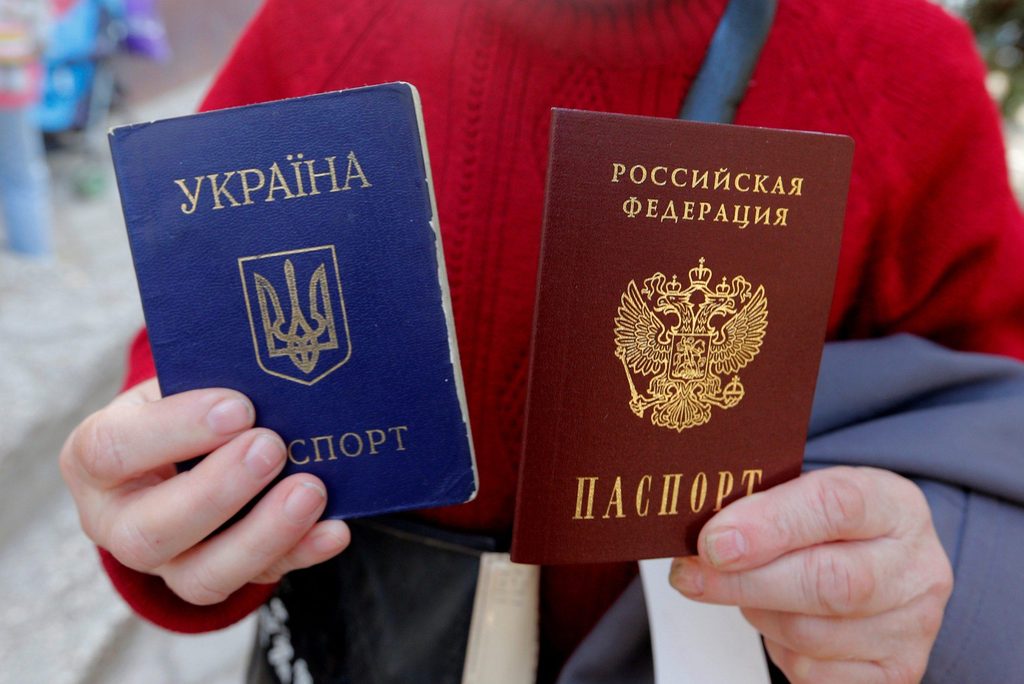
In Russian-occupied parts of Ukraine, a passport is no longer simply a document proving identity. For many residents, accepting Russian citizenship has become a condition for accessing healthcare, receiving a pension, keeping a job or protecting their home. What Russian authorities present as an administrative procedure has become a powerful instrument of coercion.
Since Russia’s occupation of Crimea in 2014, the authorities have used passport issuance to consolidate control over Ukrainian territory. The policy expanded to occupied parts of Donetsk and Luhansk in 2019 and intensified following Russia’s full-scale invasion in February 2022.
In occupied areas of Donetsk, Luhansk, Zaporizhzhia and Kherson, residents have faced growing pressure to obtain Russian passports. According to a 2023 investigation by Yale University’s Humanitarian Research Lab, this pressure combines Russian legislation with restrictions imposed by occupation officials on everyday life.
The result is a system in which refusing Russian citizenship can make remaining in one’s own home increasingly difficult.
When Citizenship Becomes a Condition for Survival
Russian passportisation is often described as a bureaucratic process. Yet the circumstances under which people are expected to accept a passport are far from voluntary.
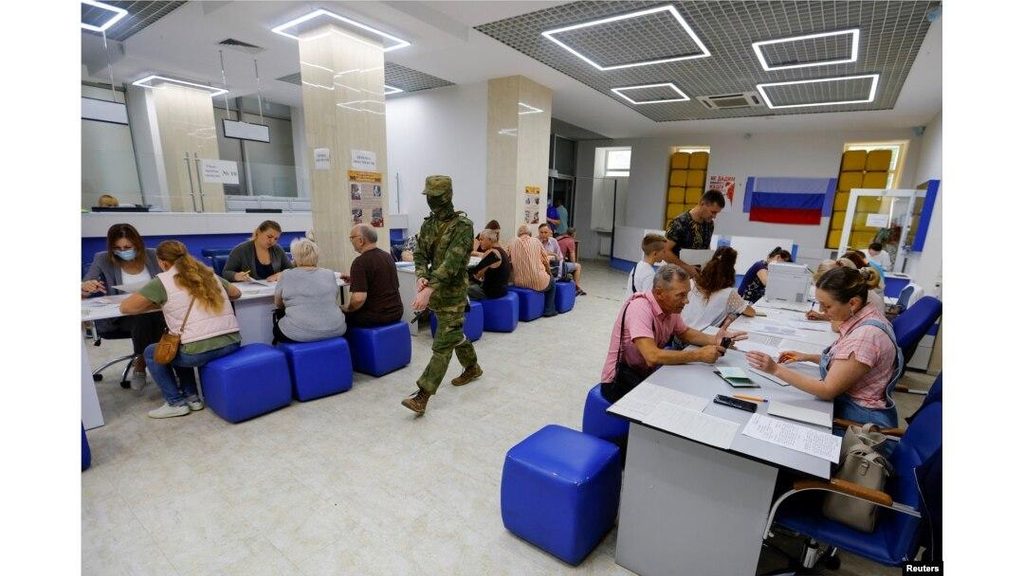
Residents of occupied territories must navigate administrative systems established by the occupying power. Documents, employment, social assistance and public services are increasingly linked to Russian citizenship or registration under Russian rules.
The Office of the United Nations High Commissioner for Human Rights (OHCHR) has documented how Russian authorities use both explicit requirements and indirect pressure to compel Ukrainian residents to accept Russian citizenship.
This distinction matters. Coercion does not always involve a direct physical threat. It can also take the form of an impossible choice: accept the occupying power’s passport or risk losing the resources needed to live.
For people with limited savings, chronic illnesses or family members who depend on them, the consequences of refusal can be particularly severe.
Healthcare, Pensions and the Cost of Refusal
Access to essential services is among the most significant tools of pressure.
Yale’s research documented restrictions on medical care and social benefits for residents without Russian citizenship. In practice, difficulties obtaining Russian health insurance or completing the required administrative procedures can obstruct access to treatment.
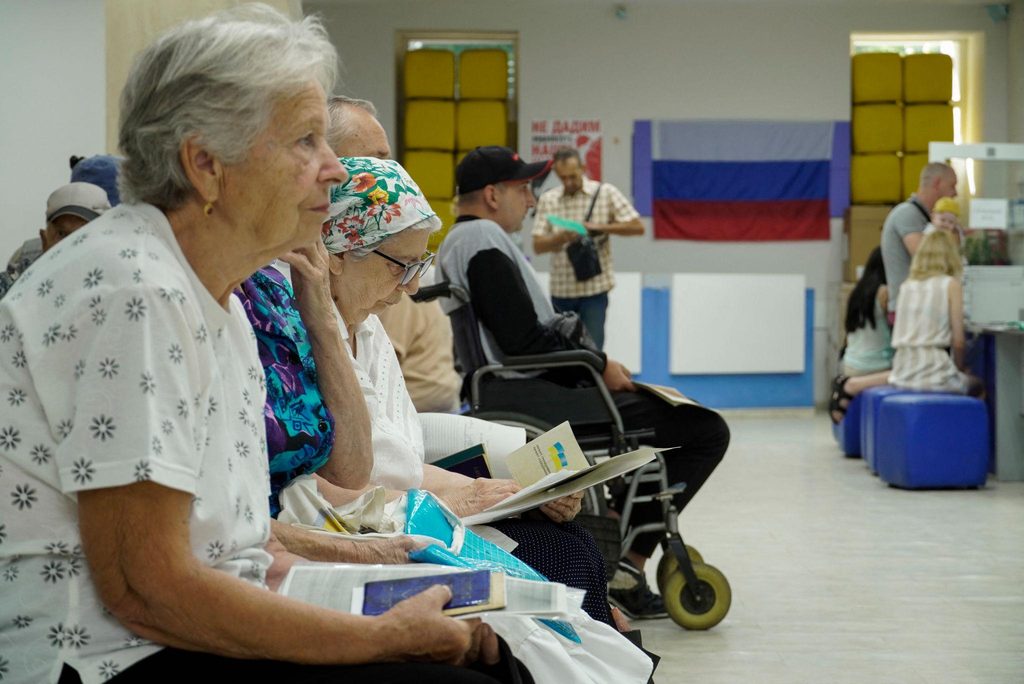
Such barriers are especially dangerous for older residents, people with disabilities and those requiring regular medication or hospital care.
Pensions have also become a central part of this system. According to OHCHR’s documentation of Russian administrative practices in occupied Ukraine, Russian citizenship became a requirement for receiving pensions under occupation authorities’ rules from 1 January 2025.
For an older person who depends on a pension to buy food, pay bills or purchase medicine, this creates direct financial pressure to accept a passport.
The problem is not limited to formal regulations. In February 2023, LB.ua reported that occupation authorities in Zaliznyi Port, Kherson region, threatened residents with the loss of social payments unless they obtained Russian passports.
When basic support becomes conditional on accepting citizenship, the supposed freedom to refuse is severely undermined.
A Passport Required to Work
Employment presents another dilemma.
The occupying authorities have introduced Russian administrative and employment structures, placing pressure on workers and business owners to comply with new documentation requirements.
Reports from occupied territories describe threats of dismissal, restrictions on employment and difficulties maintaining business licences for those who refuse Russian passports.
The consequences extend beyond the individual worker. Losing employment can leave an entire household without a reliable income, while business restrictions can undermine local livelihoods.
In its World Report 2026, Human Rights Watch identified employment restrictions as one of several measures used to pressure Ukrainian civilians into accepting Russian citizenship.
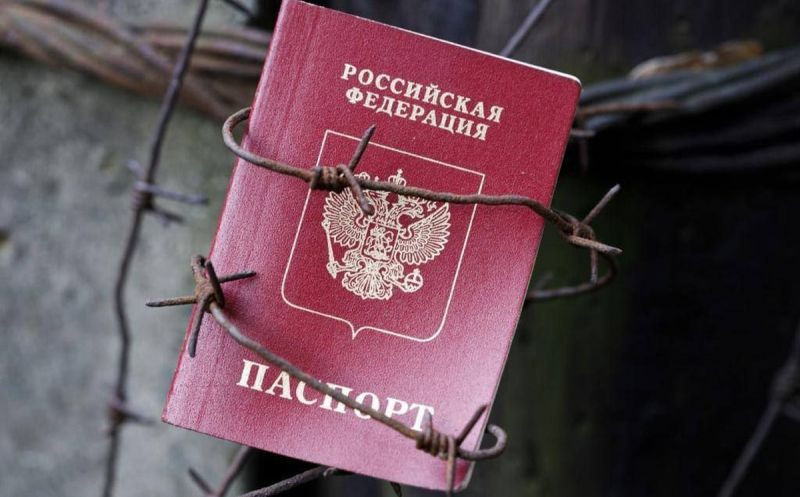
The passport therefore becomes more than an identification document. It becomes a means of controlling economic participation and increasing residents’ dependence on the occupying administration.
The Risk of Losing Your Own Home
One of the most alarming consequences of occupation concerns property rights.
Russian occupation authorities have introduced measures targeting homes they classify as unused or abandoned. These policies particularly threaten Ukrainians who fled the fighting but still own apartments or houses in occupied areas.
According to Human Rights Watch, by November 2025, occupation authorities had issued notices concerning more than 20,000 properties across occupied areas of Donetsk, Luhansk, Zaporizhzhia and Kherson regions.
Under the documented procedures, property owners may be required to appear in person and present a Russian passport within 30 days of receiving a notice to protect their property from seizure.
For displaced Ukrainians, these requirements can be practically impossible to fulfil. Returning to occupied territory may expose them to serious security risks, while obtaining Russian documents may be contrary to their wishes.
The result is another form of pressure: to defend ownership of a home, a person may first be expected to accept the authority of the state occupying it.
Human Rights Watch has described these property measures as violations of international law.
The Threat of Expulsion
The pressure increased further in 2025.
A Russian presidential decree issued in March 2025 required residents of occupied parts of Donetsk, Luhansk, Zaporizhzhia and Kherson to regularise their legal status by 10 September 2025.
As Human Rights Watch explained, Ukrainians without Russian passports could be treated under Russian rules applicable to foreign nationals and face the threat of expulsion. The organisation noted that the practical consequences of the decree remained unclear when its report was prepared.
Nevertheless, the implication is profound: Ukrainian citizens living in Ukrainian territory may be treated as foreigners by the authorities occupying their homes.
This transforms citizenship from a matter of personal identity into a mechanism of territorial control.
A Violation of International Law
Russia’s passportisation policy raises fundamental questions under international humanitarian law.
Article 45 of the 1907 Hague Regulations prohibits an occupying power from compelling inhabitants of occupied territory to swear allegiance to it. The Fourth Geneva Convention also protects civilians under occupation and prevents annexation or changes in local institutions from depriving them of the Convention’s protections.
The Parliamentary Assembly of the Council of Europe has explicitly condemned forced passportisation of Ukrainian citizens.
The European Union has also rejected Russia’s attempts to impose its documents on occupied territories. In December 2022, the Council of the EU decided that Russian travel documents issued in occupied Ukrainian regions, or to residents of those regions, would not be accepted for obtaining Schengen visas or crossing the Schengen area’s external borders.
Importantly, obtaining a Russian passport under occupation should not automatically be interpreted as a voluntary political choice or an expression of loyalty.
For many civilians, it may be a decision made under pressure to protect their children, receive medical care, continue working or prevent the loss of their home.
Ukraine has consistently rejected forced passportisation and maintains that the imposition of Russian documents does not, in itself, deprive its citizens of Ukrainian nationality.
More Than a Piece of Paper
The consequences of forced passportisation extend beyond administrative control. They affect the ability of people to exercise fundamental rights while remaining in the communities where they have lived for years or decades.
A pensioner may face losing an essential source of income. A worker may risk unemployment. A patient may encounter barriers to treatment. A family displaced by war may find that protecting its property requires returning to occupied territory and producing Russian documents.
These are not ordinary citizenship choices made in ordinary circumstances.
They are decisions shaped by occupation, unequal power and the threat of losing access to essential aspects of everyday life.
A passport should establish a person’s identity, not determine whether they can receive healthcare, earn a living or keep their home. In occupied Ukraine, Russia has turned that document into an instrument of control.
Understanding this system is essential to recognising the broader consequences of occupation — and to ensuring that the choices Ukrainians make under coercion are never mistaken for freely given consent.