What does it mean to start your life over in another country when you don’t know whether you will ever be able to return home? For millions of Ukrainians, this is not a hypothetical question. It has been their reality for more than four years.
New cities, unfamiliar languages, different schools and workplaces. Ukrainians who fled Russia’s war have gradually become part of communities across Europe. They work, study, raise children and make plans. Yet behind these everyday routines are families separated by borders, homes they cannot return to, and uncertainty about what comes next.
Europe’s temporary protection system has given millions of people safety and a chance to rebuild their lives. But behind one statistical figure lie countless different experiences.
Ukrainians Across Europe
According to Eurostat, 4.43 million people who fled Ukraine were living under temporary protection in the European Union at the end of July 2026.
Germany hosted the largest number, approximately 1.29 million, followed by Poland with 953,000 and Czechia with 395,000.
But the picture changes when population size is taken into account. Czechia had 36.2 beneficiaries of temporary protection per 1,000 residents, Slovakia had 27.5, and Cyprus had 26.7. The EU average was 9.8.
The demographics are equally revealing. Adult women accounted for 43.4% of beneficiaries, adult men for 27.1%, and minors for 29.4%.
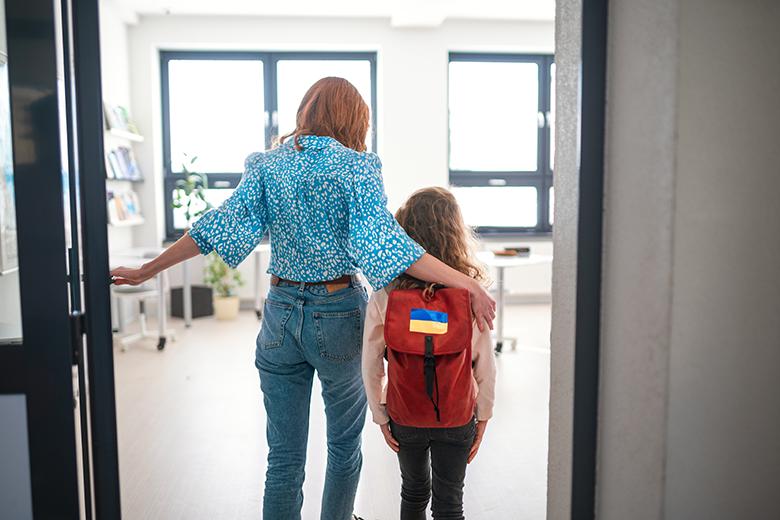
Nearly one in three people under temporary protection was a child. For them, displacement means more than a new address. It means a different language, a new school, new friendships and a childhood unfolding far from home.
The Scale of Forced Displacement
More than four million people under temporary protection in the EU represent only part of a much larger story.
Ukrainians have also found refuge in countries outside the European Union, while millions more have been displaced within Ukraine itself.
According to estimates from the International Organization for Migration, approximately 3.6 million people were internally displaced in Ukraine in October 2026.
For some, displacement meant moving to another city. For others, it meant several moves, losing their homes or spending years separated from loved ones. Some first sought safety elsewhere in Ukraine before eventually crossing an international border.
This is why the number of people under temporary protection, the number of refugees abroad and the number of internally displaced people are different measures that should not be confused.
The war has redrawn the geography of millions of Ukrainian lives. Even those who remain in Ukraine may now live hundreds of kilometres from the places they once called home.
Rights Under Temporary Protection
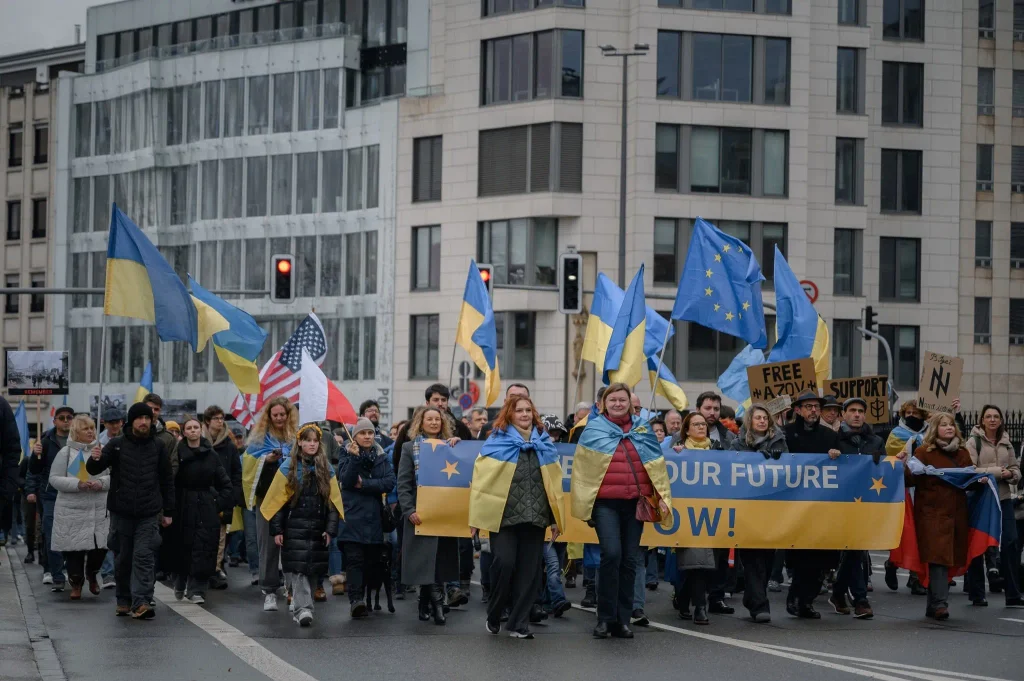
In March 2022, the European Union activated its Temporary Protection Directive for the first time to respond quickly to the mass displacement caused by Russia’s full-scale invasion.
The mechanism allowed eligible people fleeing Ukraine to live legally in EU countries without going through the usual individual asylum procedure.
It provides access to employment, education, healthcare, social assistance and housing support, subject to national rules.
In 2026, the EU adopted a decision extending temporary protection until 4 March 2028.
For millions of Ukrainians, this means additional time and greater certainty about their legal right to remain. However, temporary protection does not automatically guarantee permanent residence.
As a result, questions about future residence options are becoming increasingly important for people who have already spent years living, working and studying in Europe.
The Challenges of Building a New Life
Finding a job in another country is difficult enough. Finding one that matches your education, experience and professional ambitions can be even harder.
Some Ukrainians face language barriers, complicated diploma recognition procedures and differences in professional requirements. As a result, qualified specialists sometimes have to accept jobs outside their fields.
For parents raising children alone abroad while other family members remain in Ukraine, these challenges are compounded by the need to balance work, language learning and family responsibilities.
Children face challenges of their own.
Over the years, many Ukrainian pupils have learned new languages, made friends and adapted to European schools. Yet some continue studying Ukrainian curricula alongside their education in the host country.
This helps them maintain a connection to Ukraine, but it can also create an additional academic burden.
For Ukrainian families, integration is not simply about finding a job or enrolling a child in school. It is about building a new everyday life while preserving a connection to the one they were forced to leave behind.
The Difficult Decision About Returning Home
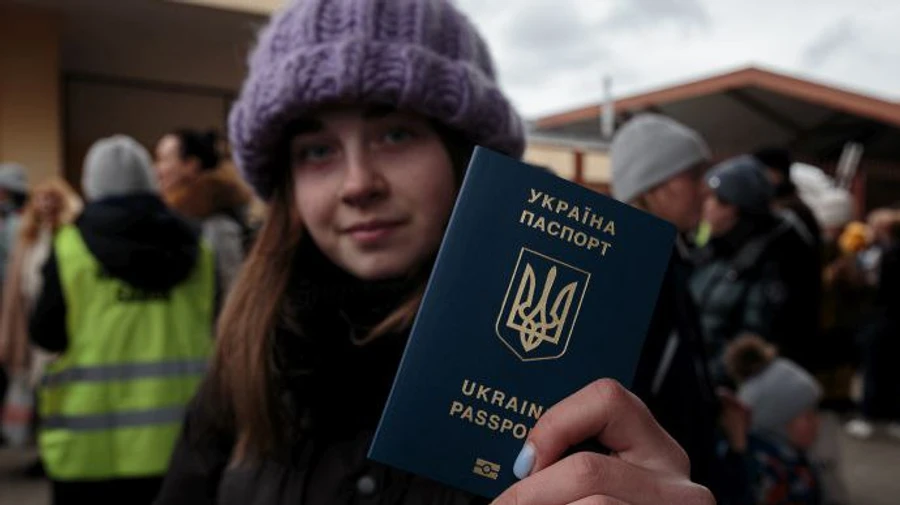
The question of returning to Ukraine remains central to discussions about the future of temporary protection.
For many, returning depends on safety, available housing, employment, schools and healthcare. Some towns and cities remain under threat of Russian attacks, while others have suffered extensive destruction.
Meanwhile, after years abroad, Ukrainian families have gradually established new lives. Children have settled into schools, adults have found employment, and new friendships and support networks have developed.
Some people hope to return at the first safe opportunity. Others are considering a future in their host countries. Many are still unable to make a final decision.
Any return must be voluntary, safe and based on realistic opportunities to rebuild a life.
Ukraine will need the knowledge, skills and experience of its citizens for reconstruction. At the same time, supporting Ukrainians abroad helps preserve that potential.
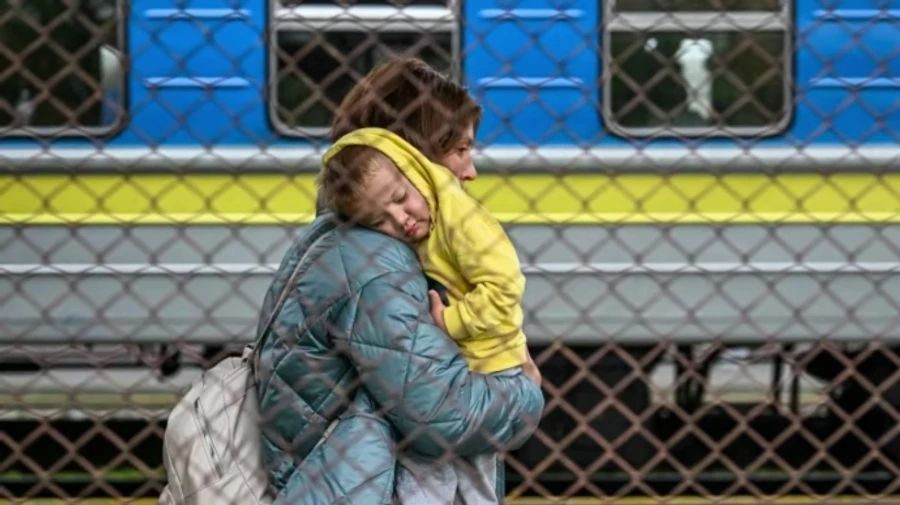
Behind the Numbers Are Human Stories
European countries have given millions of Ukrainians the opportunity to live in safety, work and continue their education. This support has been an important expression of international solidarity.
Yet after more than four years of war, the issue is no longer only about providing shelter. Stability, professional development, children’s education and the ability to plan for the future are becoming increasingly important.
4.43 million is not just a statistic. It represents millions of people who were forced to leave their familiar lives behind and are now trying to build new ones.
And as Russia’s war continues, what matters most is ensuring that Ukrainians can live with dignity, maintain their connection to their homeland and make their own decisions about where they will call home.