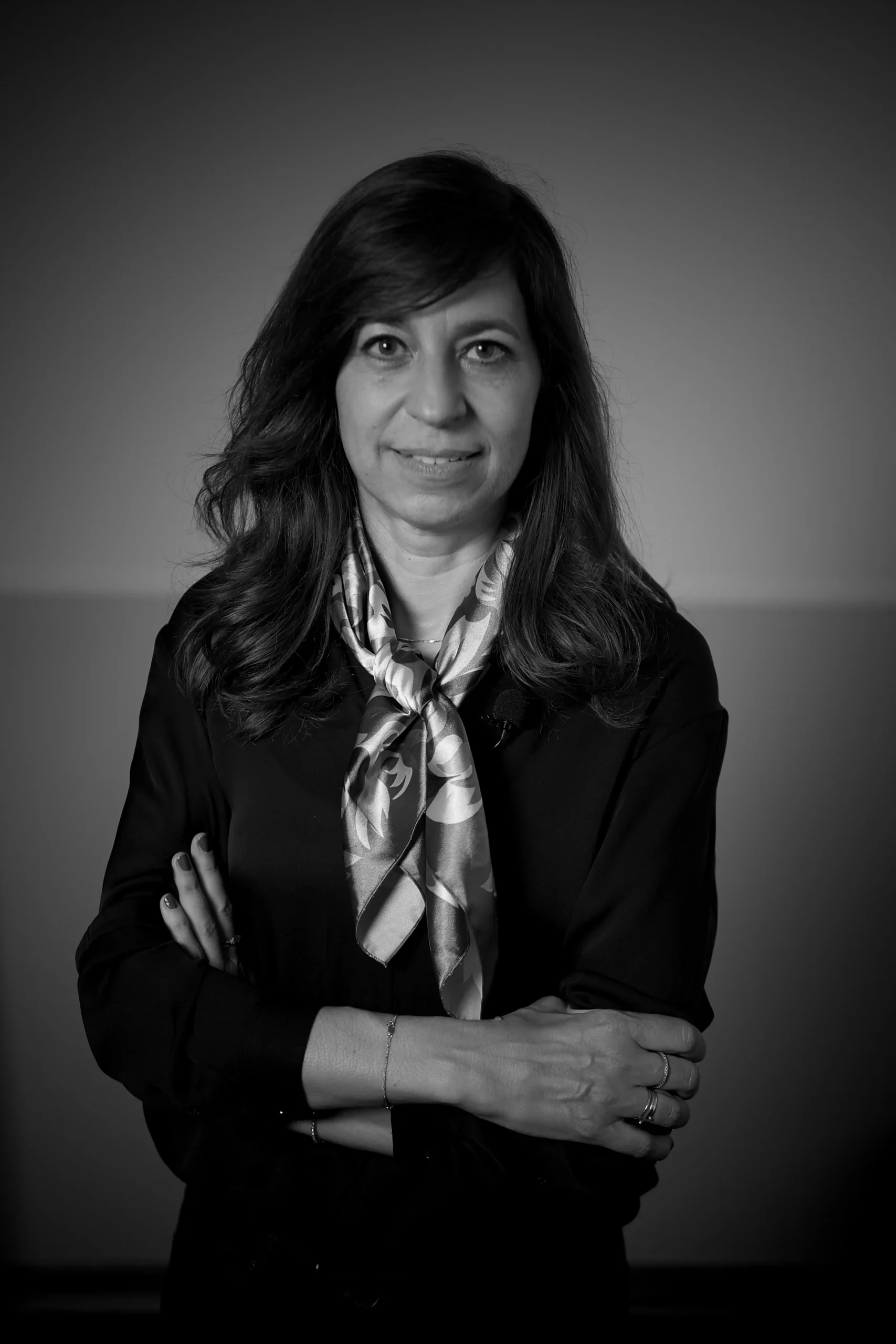
Anne Calteux
I was born and raised in Echternach, close to the German border, during the 1970s, so in the middle of the Cold War. But strangely enough, the Cold War itself never felt very close to me. It was there in the background, politically, historically, but as a child it felt distant.
What felt much more present were the memories of the Second World War.
My father was eight years old when the war broke out. He told us many stories about occupation, fear, and liberation. He still remembered the arrival of the Americans very vividly. My godfather had been forcibly enrolled by the Germans and later became a prisoner in a Russian camp. Those stories stayed with me throughout my childhood.

“Europe Stops Being Abstract When It Is Tested.” How did your childhood and upbringing shape your political thinking and your relationship with Europe?
“Even when the Berlin Wall fell, I was seventeen and had many other things on my mind. But strangely enough, I could relate much more to the Second World War because those memories were alive inside my family.”
think this is also where my emotional connection to Europe began. Not through institutions at first, but through inherited memories of war and peace.
My childhood itself was very happy. Echternach was my entire world until I left to study law in Strasbourg and later in London. And there, something changed.
I suddenly met people from all over Europe and beyond. Europe was no longer just an idea. It became something tangible and alive.
“That period left something very strong inside me. I realized I wanted to do something connected to something bigger than just Luxembourg.”
“For a very long time, European values were mainly words. Today, we live those values.”
What is especially striking today is that people who are not yet part of the European Union are also fighting for those same values. Ukraine reminds us what those principles actually mean when people are willing to sacrifice so much for them.
“Ukraine reminds us what European Values actually mean when people are willing to fight and die for them.”
At the same time, Europe has never been about uniformity.
It is twenty-seven countries with different histories, different fears, different sensitivities, and different national interests. And yet, despite fragmentation and disagreements, we nearly always manage to find a compromise. “That is the beauty of the European Union. We nearly always end up finding a common position.”That capacity for coexistence and compromise is one of the things I admire most about Europe.
We as Europeans need to do more, to be able to defend ourselves and be more resilient for the future. Ukrainians show us how it can be done, how to remain committed and resilient. We need Ukraine on board, we are facilitating the accession of Ukraine because it would make us stronger. Nevertheless we need to work on our own resilience and capacity to defend ourselves and our own unity. Ukraine helps us to do that, it’s a mutually profitable and enriching situation for both of us.
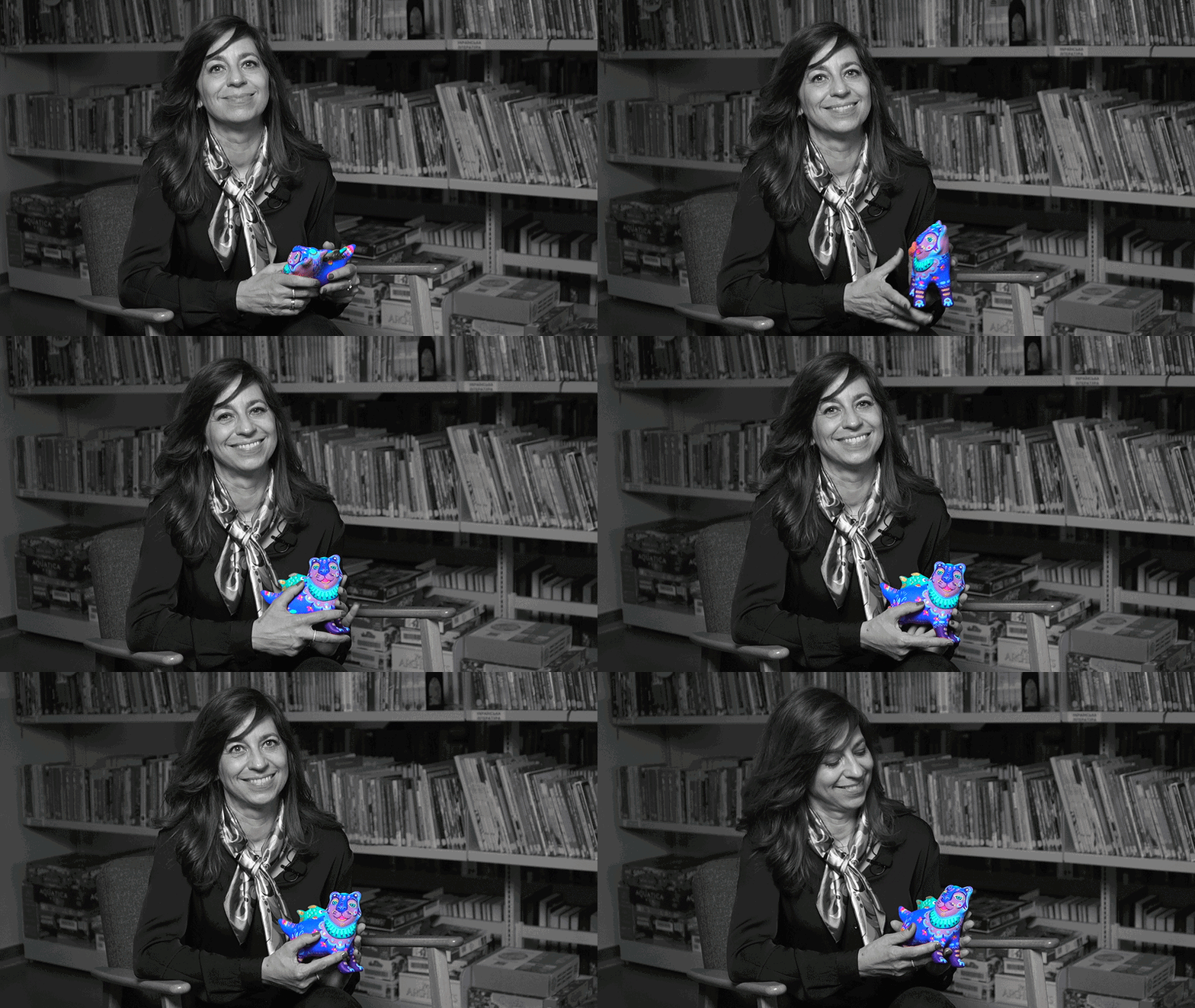
At the beginning of the full-scale invasion, people felt deeply connected to what was happening. The war was discussed everywhere. People followed developments constantly and Ukraine was present in daily conversations, in the media, inside families, workplaces, and schools. But over time, distance naturally returns. People want to continue living their lives. Fatigue appears. The sense of urgency slowly fades and the conflict risks becoming something distant again, even though it is still happening every single day. Our responsibility is therefore to keep the moment alive. This is why communication matters so much.But communication should never be based on fear or panic. I do not believe in instilling fear in people. During crises, whether during COVID or during the war in Ukraine, communication must remain human, understandable, and accessible. Therefore we work with Lukraine asbl. and also the Advocacy Coalition.
You have to speak people’s language and take their concerns seriously. Emotions are important. The moment institutions only communicate through technocratic vocabulary, acronyms, or abstract language, people disconnect emotionally. What matters is helping citizens understand that these crises are not distant geopolitical abstractions disconnected from their lives. It is about their present, but also about their future, about their children, and about our society as a whole. Shared responsibility is a core issue when talking to people, take them seriously and work with them.
Culture is also extremely important in this context. Art, music, literature, film, testimony: all these things create emotional connection in ways politics alone often cannot. Culture creates empathy and keeps people emotionally engaged over longer periods of time.
This is also why civil society initiatives, advocacy networks, journalists, artists, and associations play such a crucial role. They help maintain solidarity and keep Ukraine visible inside European societies.
Citizens need to understand how manipulation works and how narratives are constructed.
It is an extremely serious challenge, an existential threat for all of us. For quite a long time, I think Europe was somewhat naive about the scale and sophistication of disinformation. The Romanian elections recently have shown us that this can also happen quickly and under the radar. Disinformation is not simply false information online. It is something much more structural. It directly threatens democratic societies, public trust, and social cohesion. We have seen how manipulation and foreign interference can destabilise elections and shape political discourse. Very often this happens underground and only afterwards do societies realise how strongly they were manipulated.At the same time, I believe very strongly that Europe must not abandon its own principles while responding to this threat. We will never use the same methods as those who spread disinformation because that would contradict our own values. What we can do is strengthen democratic resilience.
This is why media literacy and digital literacy are so important, especially for younger generations who are constantly exposed to enormous amounts of information online. Citizens need to understand how manipulation works and how narratives are constructed. We ourselves as European Commission are not on Tiktok, it’s a political choice, but as Representation of the Commission in Luxembourg we work with content creators and Influencer to work on this platform and get our messages accross.
We also increasingly cooperate across Europe because disinformation adapts itself differently from country to country. What appears in Romania today might appear in Luxembourg tomorrow. So this has become a very crucial field of European cooperation.
We have this one life. We should make the most of it. Not only for ourselves, but for the people we love.
You are often described as a crisis manager. What personally gives you strength during difficult periods?
I think first of all I inherited a very strong work ethic from my mother. She always taught me to do the best with what I had, to work hard, to prepare seriously, and to take opportunities seriously. That stayed with me throughout my life. But beyond discipline and work ethic, there is also a strong sense of public service. I always wanted my work to contribute to something meaningful for society. During COVID, despite the exhaustion, despite the long nights and enormous pressure, I kept telling myself that the work we were doing mattered for everyone living in Luxembourg.
The same applies today regarding Ukraine and Europe. Being able to contribute, even on my own level, to something larger than myself gives meaning to the work.I also remain fundamentally optimistic. Even in difficult times, I always try to focus on the positive side and continue moving forward.
Toward the end of our conversation, Anne Calteux pauses for a moment before speaking less about politics and institutions, and more about life itself.
We have this one life. We should make the most of it. Not only for ourselves, but for the people we love.
In times marked by war, uncertainty, democratic pressure, and fragmentation, Anne Calteux’s reflections ultimately return to something profoundly human. Trust. Connection. Presence. Be someone people can trust. Be there for others. Share something meaningful together. That is what life is about.
Interviews & Directed by Victoria Boretska & Philippe Schockweiler
Camera, Editing: Igor Kryzhanovskij
© Lukraine.Asbl, Advocacy Coaliton.